Uncategorized

How to Grow Strawberry at Home: A Complete Guide

happy children brother and sister eating strawberries with milk

Benefits of Home Strawberry Cultivation

Health & Natural Taste

Growing strawberries at home offers a range of appealing benefits. First and foremost is the health and natural taste advantage: strawberries grown at home are free from harmful pesticides and chemicals, making the fruit safer and more nutritious to eat. Home cultivation allows full control over what goes onto the plants, greatly reducing exposure to toxic substances often present in commercially grown strawberries.

Fun & Enjoyable Gardening

Another great benefit is the enjoyable and fun experience of growing and caring for strawberry plants. Gardening can be both a relaxing hobby and a satisfying activity, as watching your plants grow and harvesting your own berries creates a strong sense of fulfillment.

Economic Savings

There are also clear economic savings, since growing strawberries at home reduces the need to buy fresh fruit, which can be expensive when purchased frequently throughout the season. Once established, strawberry plants multiply and produce fruit annually, making them a cost-effective investment over the years.

Home Beauty & Natural Decoration

Additionally, strawberry plants add to the beauty of the home environment. Whether grown in pots, garden beds, or hanging containers, the bright red berries and green leaves provide natural decoration, enlivening patios, balconies, or kitchen gardens.

Ease & Quality with Semi-Hydroponics

Maintaining strawberry plants at home can be challenging due to their sensitivity to moisture—overwatering can cause root rot and disease, while underwatering leads to shriveled, dying plants. They are also vulnerable to pests, fungal infections, temperature stress, and require careful management of soil quality and nutrients, which can be labor-intensive, especially in containers where soil dries out or overheats quickly. The semi-hydroponic method, which grows strawberries in a soilless substrate, elegantly addresses these issues by reducing soil-borne pests and diseases and providing precise control over water and nutrient delivery. This system simplifies care, requires less frequent watering, and keeps roots cleaner and healthier, producing strawberries that are sweeter, juicier, and easier to harvest and wash. Furthermore, semi-hydroponic setups use water efficiently and create a clean, organized growing space that is easier to manage than traditional soil gardening, making home strawberry cultivation both simple and highly rewarding.

Essential Materials & Requirements

  • Seedlings: Certified disease-free Albion strawberry plugs or tissue culture plantlets. Avoid bare-root plants indoors.
  • Lighting: Full-spectrum LED grow lights (12–16 hrs/day, PPFD ~200–400 µmol/m²/s at canopy). Position 12–18 inches above plants.
  • Temperature: 65–75°F (18–24°C) day, 59–65°F (15–18°C) night.
  • Humidity: 60–70% during vegetative growth, 50–60% during fruiting to prevent mildew.
  • Airflow: Essential to reduce fungal pressure; use small oscillating fans.
  • Pollination Tools: Soft brush, electric pollinator, small fan, or bumblebee hives (if allowed for commercial setups).
  • Monitoring Equipment: pH & EC meters for water/nutrient balance. Optional humidifier/dehumidifier for climate control.

System Selection Hydroponic Options

  • NFT (Nutrient Film Technique): Shallow, continuously flowing nutrient stream; best for commercial setups.
  • Dutch Buckets / Bato Buckets: Suitable for larger plants and scalable production.
  • Tower / Vertical Systems: Space-efficient, very effective for strawberries indoors.
  • Deep Water Culture (DWC): Alternative hydroponic system providing continuous oxygenation to roots.

Self-Watering Planters (SWPs)

  • Best for smaller-scale or home growing.
  • Use high-quality coco-coir + perlite (60:40) or peat-perlite mix for wicking.
  • Choose deep planters (≥20 cm / 8") to prevent waterlogging.
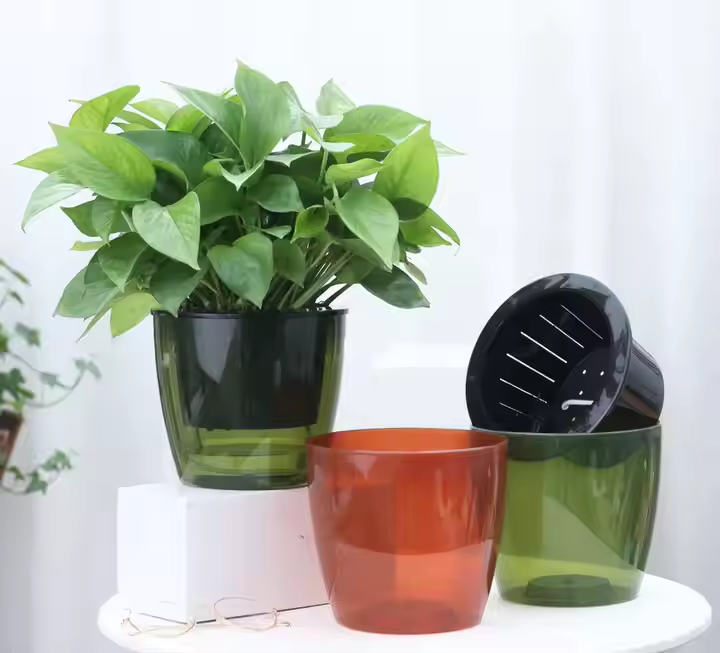
  • Employ a wicking reservoir system allowing roots to pull water up rather than remain submerged.
  • Fill reservoirs with diluted nutrient solution (EC 1.2–1.5), occasionally top-water to flush salts.
  • Monitor for root rot; oxygenation is critical—add perlite or air domes if possible.

Planting & Maintenance

  • Spacing: 25–30 cm (10–12") apart to accommodate vigorous Albion growth.
  • Pruning & Runners: Remove runners unless propagating; prune old leaves and thin crowded growth to improve airflow.
  • Planting Media: For hydroponics, use inert media (perlite, coco coir) in net pots; ensure crowns remain above media level. For SWPs, use light, well-draining potting mix enriched with organic matter.
  • Water & Nutrient Management:
  • Hydroponics: pH 5.8–6.2, EC 1.2–1.4 (vegetative), 1.6–2.2 (flowering/fruiting). Replace nutrient solution every 10–14 days.
  • SWPs: Keep reservoirs filled, add liquid fertilizer (balanced NPK, e.g., 10-10-10) every 2–3 weeks.

Lighting & Environmental Control

  • Maintain 14–16 hrs/day for Albion strawberries.
  • Ensure consistent temperature, humidity, and airflow as above.
  • Rotate pots periodically in SWPs for even growth.
 

Pollination & Pest Management

  • Indoor Pollination: Use soft brush, electric pollinator, gentle fan, or bumblebee hives for commercial setups.
  • Pest Control: Inspect weekly; use organic controls if needed (e.g., neem oil, insecticidal soap).

Harvesting & Post-Harvest Handling

  • Harvest berries fully red every 2–3 days.
  • Use clean, dry containers; store at 32–36°F (0–2°C) up to 5 days.
  • Clean systems or planters after each cycle to prevent disease buildup.

Yield & Commercial Considerations

  • Well-managed hydroponic Albion strawberries can yield 0.5–1.0 lb (250–450 g) per plant per month under continuous production.
  • Plants remain productive for 12–18 months indoors with proper pruning, lighting, and nutrient management.
  • Marketing Tips: Emphasize “pesticide-free,” “locally grown,” and “year-round fresh.” Direct-to-consumer sales (farmers’ markets, restaurants, subscription boxes) increase profitability.

Summary

Albion strawberries thrive indoors in both hydroponic and self-watering planter systems. Hydroponics offers precise nutrient and water control, higher yields, and easier management in commercial setups, while SWPs provide a simple, oxygenated, low-maintenance solution for home growers. Focus on strong lighting, proper environmental control, careful nutrient management, and assisted pollination to achieve high-quality, sweet, and juicy strawberries year-round.

Leave a Reply