Uncategorized

How to Grow a Venus Flytrap at Home A Complete Guide

Grow24-venus-flytrap

The Venus flytrap (Dionaea muscipula) is a member of the Droseraceae (sundew) family and the only species of Dionaea. The species name muscipula is Latin for "mousetrap," which is quite fitting for this plant. Like all plants, it gets its energy through photosynthesis. However, unlike most plants, it lives in poor soil conditions. To compensate for the lack of nutrients, it hunts and digests prey.

It grows in zones 7 through 10 in the United States and is native to a small area in the southeastern U.S. It is not found on the coast where the plant experiences temperatures below 40 degrees.

If you happen to come across a Venus flytrap in the wild, do not try to feed it or pull it out of the ground, as this could be a major threat to the species.

The Right Place for Venus Flytrap

You can grow your plant indoors or in a greenhouse regardless of the region or climate, but the best place to grow this plant is outdoors. Again, we remind you that your location must be stable and may be full of flies!

The Right Soil for Venus Flytrap

This plant naturally grows in acidic and nutrient-poor soil. The main nutrients for Venus flytraps come from insects. Your soil should be stable and light.

A mixture of 2/3 sphagnum moss and 1/3 sand is one option for growing this plant.

If you plant Venus flytraps in regular potting soil, they will not grow because potting soil contains nutrients. Another thing to remember is to never add lime or fertilizer to its soil!

If you are using a terrarium, cover it with sand and add the soil mixture to make sure the soil is well-drained.

Planting Venus Flytrap in a Pot

Dig a small hole in the soil, with the bulb facing down and the top of the bulb level with the soil.

How to Water Venus Flytrap

This plant naturally grows in marshes, so the more we can simulate this environment, the better. Your soil should always stay moist. There are two general methods of watering:

  • Watering from above and
  • Watering from below

Each method has its own advantages. For example, watering from above helps to clean the soil and prevent mineral deposits. It is also simple and convenient. Watering from below is the best option to avoid overwatering.

Watering from below is not difficult; there are two solutions for you:

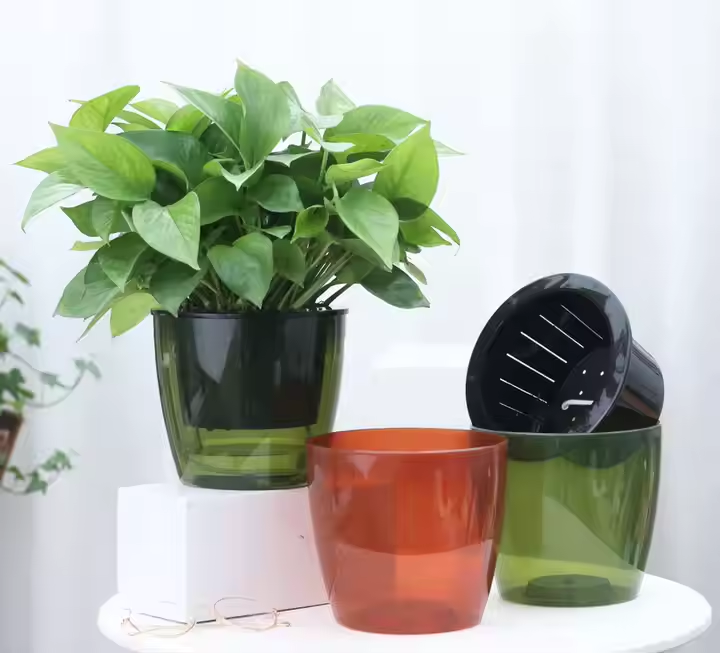
  1. Get a self-watering pot.
  2. Place the pot in a tray with water and let the soil absorb it from below.

Another important issue is the quality of the water. Tap water is usually chlorinated and too alkaline. Try not to use tap water at all. The most suitable water for this plant is rainwater or distilled water.

Leave a Reply